
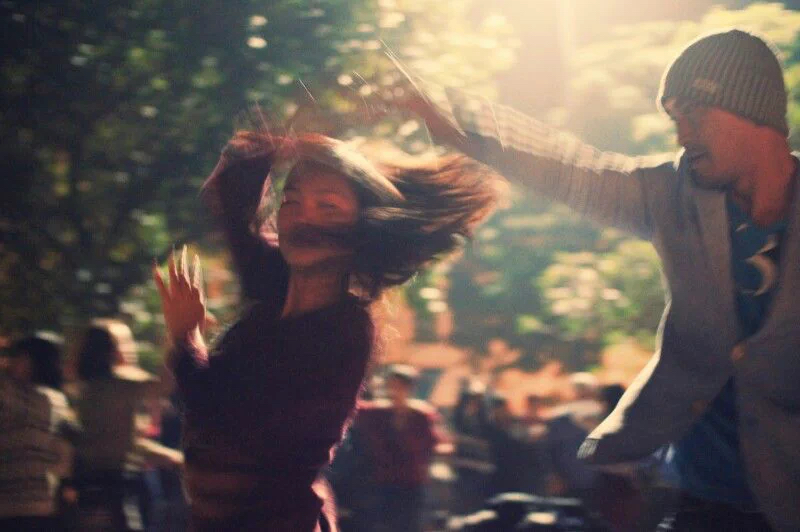
“David danced before the Lord with all his might.”
– 2 Samuel 6:14
I’ve always loved this verse, though not for any particularly theological reason. It has always struck me simply as a beautiful sentence. David, remembered throughout the Hebrew Bible as a king, a warrior and a poet, is reduced in that single sentence to something far more fundamentally human. He dances.
The verse appears in the Second Book of Samuel, at the moment the Ark of the Covenant is finally being brought into Jerusalem. For the Israelites, the Ark was the visible sign of God’s covenant with His people, representing His presence dwelling among them. It was an event of immense political, religious and national significance; the sort of occasion one imagines demanding solemn processions, measured ceremony and choreographed displays of reverence. David, however, responds rather differently. Clothed in a simple linen ephod rather than the robes of a king, he dances before the Ark “with all his might”. His wife Michal watches from a window and despises him for what she perceives to be an undignified display, accusing him later of making a spectacle of himself before the people. David’s answer is lovely. If rejoicing before God required him to surrender his dignity, then dignity, he suggests, was hardly worth preserving.
Whether one approaches that passage as history, literature or scripture, I think there is something moving about it. It suggests that there are moments in life when joy demands more ; moments when gratitude, awe or celebration become almost too expansive for language and instead ask something of the body. Sometimes words are simply insufficient. We sing when we are overwhelmed. We cry when words fail. We dance.
The more I think about dance, the more extraordinary I find the fact that it is both completely ordinary and almost impossible to explain. It is something most people encounter so naturally that we rarely stop to question it. We dance at weddings, at festivals, in clubs, at concerts, in our kitchens when a song comes on unexpectedly and we decide, for reasons we cannot quite justify, that standing still is no longer an option. When you step back and look at dance from a historical perspective, it becomes something much larger than simply a form of entertainment. It is one of humanity’s oldest languages.
Long before there were theatres, concert halls or carefully choreographed performances, there were people moving together. Before written records, before many of the structures we associate with civilisation even existed, humans were already gathering around rhythm. They danced to celebrate, to mourn, to worship, to mark seasons, to tell stories and, perhaps most importantly, to experience belonging.
That is what has appealed to me most recently: not simply the fact that humans dance, but the fact that we seem almost unable not to. That I seem almost unable to.
There is, of course, a scientific explanation for some of this. Dancing stimulates the release of dopamine, serotonin and endorphins, the chemicals associated with pleasure, reward and emotional wellbeing. Moving alongside others also strengthens feelings of connection; synchronised movement has been shown to encourage trust and social bonding, which perhaps explains why a room full of strangers can feel strangely familiar once everyone is moving to the same rhythm.
But while the science is interesting, I do not think it fully captures why dance matters.
Explaining dancing purely through biology feels a little like explaining a painting purely through the chemical composition of the paint. It may be accurate, but it misses the thing that made someone want to create it in the first place. The chemistry tells us what happens inside the body; it does not tell us why human beings across every known culture have repeatedly chosen movement as a way of expressing what matters most to them.
Perhaps that is what I find so beautiful about dance. It is simultaneously deeply personal and entirely communal. A person dancing alone in their bedroom and thousands of people moving together in a crowded stadium are participating in the same instinct, despite the enormous difference between those experiences. It belongs to the individual, but it also belongs to the group. It allows someone to express something entirely their own while also becoming part of something beyond themselves.
I think I first became aware of this during my Interrail trip across Europe.
Most obviously, this thought came to me in Berlin.
My friends and I had met a guy called Diego (shout out Diego if you are reading this), who told us about an event happening that evening playing music from the 2000s and early 2010s. It was exactly the kind of music that requires very little explanation: the songs that somehow seem to belong collectively to an entire generation, where everyone knows the words regardless of whether they would ever admit it during daylight hours 😉
Naturally, we decided we had to go.
Earlier, we had been joking with Diego about how much we loved what would often be called “white girl music”, and so he decided to introduce us to an evening dedicated to it. At the club, he met up with some of his Mexican friends, who were also studying in Germany, and almost immediately I found myself dancing with them despite having known them for almost no time at all. That is the strange thing about dance.
Friendship usually begins through information. We introduce ourselves, exchange names, explain where we are from, what we study, how we know the people around us. There is normally a gradual process through which strangers become familiar. We build connections through conversation.
Dance seems to skip that beginning.
Before I knew anything about these people beyond the fact that they were Diego’s friends, we were already laughing together, cheering for each other, singing along and celebrating each other’s terrible dance moves. There was no awkwardness to overcome because the music had already given us something in common. We did not need to find a reason to talk; we were already sharing an experience. It made me think about how unusual that actually is. In almost every other situation, approaching a group of strangers and immediately becoming part of their circle would feel unnatural. Yet place those same people on a dance floor, add music, and suddenly the boundaries become much softer. The social rules change and we become willing to be more open, more playful, more ridiculous.
Perhaps because dancing asks us to reveal something before we have time to hide it.
There is a vulnerability to dancing that I think we sometimes forget. To dance is to make yourself visible. You are allowing another person to see how you respond to music, how comfortable you are in your own body, whether you know a choreography or whether you are simply hoping confidence will distract from the fact that you have absolutely no idea what you are doing. (I am very much in the second category.) Yet I find that this vulnerability is part of the joy. Everyone is participating in the same small act of surrender.
That same night, one of Diego’s friends taught us how to line dance to Mexican music. There is a particular kind of humility involved in being taught a dance by someone who clearly knows exactly what they are doing while you are still trying to work out which direction your feet are supposed to move in. She was patient with us, and although I cannot claim that I left Berlin with a newly discovered talent for Mexican dancing, I did leave with something far more valuable: the feeling of being invited into someone else’s culture through something joyful.
Because that is another thing dance does so beautifully – It carries history.
A dance is not just a series of movements. It contains memories, traditions and stories that have often existed long before the people performing them. When someone teaches you a dance from their culture, they are not simply showing you where to put your feet. They are allowing you a small glimpse into something that belongs to them – a rare type of generosity.
There was another moment during the trip, this time in Paris, that made me think about the ability dance has to make strangers feel familiar.

We were walking through the city when I noticed a group of people dancing in a small alleyway. There was something about the scene that felt so effortlessly joyful that, naturally, I stopped to film it. I think there is something captivating about watching people dance when they are not performing for anyone. There is a difference between a staged performance and a moment where someone has simply been overcome by desire to MOVE!!! The latter feels almost like catching a glimpse of someone completely absorbed in the present.
One of the dancers noticed us watching and called us over. So, within seconds, my friends and I had gone from silently observing from the edge of the street to being pulled into the middle of it. I ended up dancing with a complete stranger in the middle of a Parisian street, despite the fact that I was almost certainly stepping on his feet far more often than I was successfully following whatever movement he was attempting to teach me.
But that hardly mattered.
There was no expectation that we would become friends afterwards, no exchange of contact details, no promise to remain part of each other’s lives. It was simply a moment that existed because two strangers happened to find themselves in the same place, at the same time, with music playing. Perhaps, that is one of the most beautiful things about dance: it does not always require permanence in order to be meaningful.
Modern life often places such emphasis on lasting connections. We measure relationships by their longevity, by how long we have known someone, by whether they will remain part of our future. Yet some of the most unexpectedly meaningful encounters are fleeting. A conversation with someone you meet on a train. A shared joke with a stranger in a queue. A dance with someone whose name you never learn. There is something romantic about that impermanence.
For a few minutes, another person enters your world completely. You share a rhythm, a laugh, a moment of mutual understanding, and then life continues.
I think dance makes this easier because it allows people to connect before they have had time to become self-conscious. We spend so much of our lives carefully presenting ourselves: choosing our words, considering how we appear, deciding what parts of ourselves we want other people to see. Dancing removes some of that calculation. And it makes the body respond before the mind has had time to edit.
The more I thought about these moments in Berlin and Paris, the more I began wondering about where this instinct came from.
How far back does dancing actually go?
It is tempting to think of dance as something created by civilisation: something refined in theatres and preserved through professional training. But the historical evidence suggests the opposite. Dance appears to be far older than many of the structures we usually associate with human culture. It did not begin in palaces or opera houses. It began with people.
The earliest evidence we have is not a written description of a dance, because writing itself came much later. Instead, archaeologists have had to look for traces left behind in art, objects and ritual practices. Some of the oldest possible depictions of dancing appear in prehistoric cave paintings, including those at the Bhimbetka rock shelters in India, where scenes dating back thousands of years appear to show groups of human figures arranged in ways consistent with communal movement.
There is also evidence from the Tassili n’Ajjer rock art in the Sahara, dating back several thousand years, which depicts human figures in postures that many researchers interpret as dancing. Of course, interpreting prehistoric art is not always straightforward as we cannot ask the people who created these images what they intended, and archaeologists must carefully distinguish between certainty and suggestion. But the repeated appearance of groups of human figures moving together across ancient artworks tells us something important even beyond the exact details of the dances themselves.
Humans gathered. Humans moved. Humans expressed themselves through their bodies.
Before humanity built cities, created empires or developed the systems through which we now organise modern life, people were already dancing. Before there were algorithms recommending music, before there were nightclubs filled with strangers, before there were carefully choreographed performances watched by audiences sitting in silence, there were communities gathered around fires, responding to rhythm together.
It makes dance feel less like something we invented and more like something we discovered. A part of ourselves that was already there. Perhaps that is why it appears so consistently throughout history, particularly within religious and spiritual traditions. Dance has so often been connected with worship because movement provides a way of expressing a relationship with something beyond the individual self. The body becomes a form of prayer.
Ancient civilisations understood this instinctively.
In Ancient Egypt, dance formed an important part of religious festivals and ceremonies, particularly those connected with gods such as Hathor, a deity associated with music, joy, fertility and celebration. Movement was their way of participating in the sacred.
The Ancient Greeks similarly understood dance as something that belonged not only to social life but to their relationship with the divine. This is particularly evident in the worship of Dionysus, the god of wine, theatre, ecstasy and transformation. The festivals held in his honour, including the Dionysia in Athens, brought together music, poetry, performance and dance in celebrations that were both religious and communal.
The Dionysia is, in fact, a theatre which emerged from this connection between movement and worship. Greek tragedy, one of the foundations of Western literature, was not originally simply a text performed by actors standing on a stage. The chorus sang, moved and responded together, embodying emotions collectively.
Even the ancient epics that form the foundation of European literature contain traces of this. In Homer’s Iliad, a poem largely concerned with war, honour and death, one of the images engraved onto the Shield of Achilles is not another battlefield scene, but a group of young men and women dancing together. Among scenes of armies and conflict, Homer chooses to include an image of celebration and movement. Dance appears alongside heroes and warriors, alongside gods and kings. It was considered worthy of remembrance.
And i truly believe this reflects how our ancestors understood something we sometimes forget: dance is not an unnecessary addition to human life. It is evidence of human life.
Club Culture
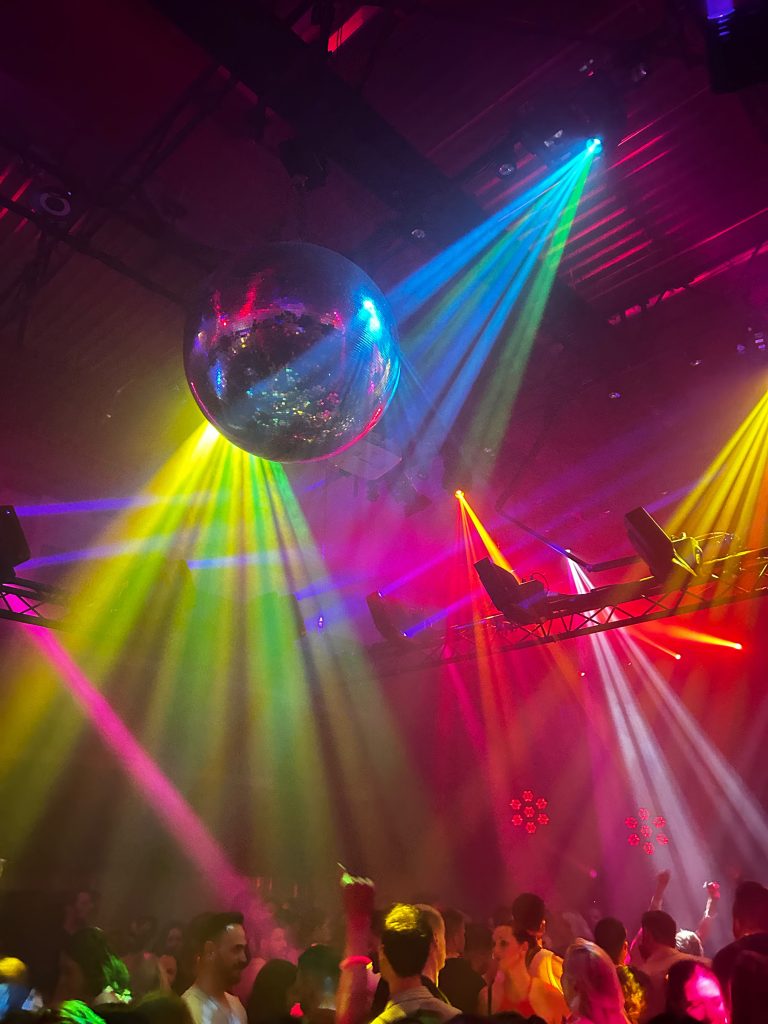
I suppose that is also why club culture, despite sometimes being dismissed as shallow or meaningless, is actually such an interesting modern expression of this ancient instinct.
Because what are people really doing when they spend money to enter a crowded room late at night just to dance? On the surface, the scene could hardly seem further away from ancient rituals or classical ballet. There are flashing lights rather than fires, electronic music rather than drums, strangers pressed together rather than communities gathered around a shared tradition.
And yet, the similarities are difficult to ignore for me. People still gather, and move together, and seek the feeling of becoming part of something larger than themselves. There is something fascinating about the fact that a nightclub, perhaps one of the most modern spaces imaginable, still fulfils a need that humans have had for thousands of years. The technology has changed completely, but the instinct has not.
The anthropologist Émile Durkheim described moments of collective celebration as “collective effervescence”: those occasions when individuals temporarily feel themselves absorbed into something larger than their own identity. Although he was writing about religious rituals, the idea feels strangely relevant to a crowded dance floor.
There are moments in a club where the individual almost disappears.
Everyone is singing the same words.
Everyone feels the same beat through the floor.
Everyone is moving because everyone else is moving.
So go dance with all your might. Go dance with your friends in the middle of a street when a song comes on and you forget that anyone else is watching, go dance in that club until five in the morning when your feet hurt but you are still not quite ready for the night to end, go dance alone in your kitchen while making breakfast, or while brushing your teeth, or in those tiny unnoticed moments where your body moves simply because it can. Dance badly, dance dramatically, dance without caring whether you look impressive, because perhaps the beauty of dance has never been that we do it perfectly, but that we do it at all. For thousands of years, across languages and cultures and generations, humans have found reasons to move together, and maybe that is because somewhere within us there remains this simple little instinct to celebrate being alive.
And as the Bee Gees so wisely put it: “You should be dancing, YEAHHHHHHH!!”
No responses yet