
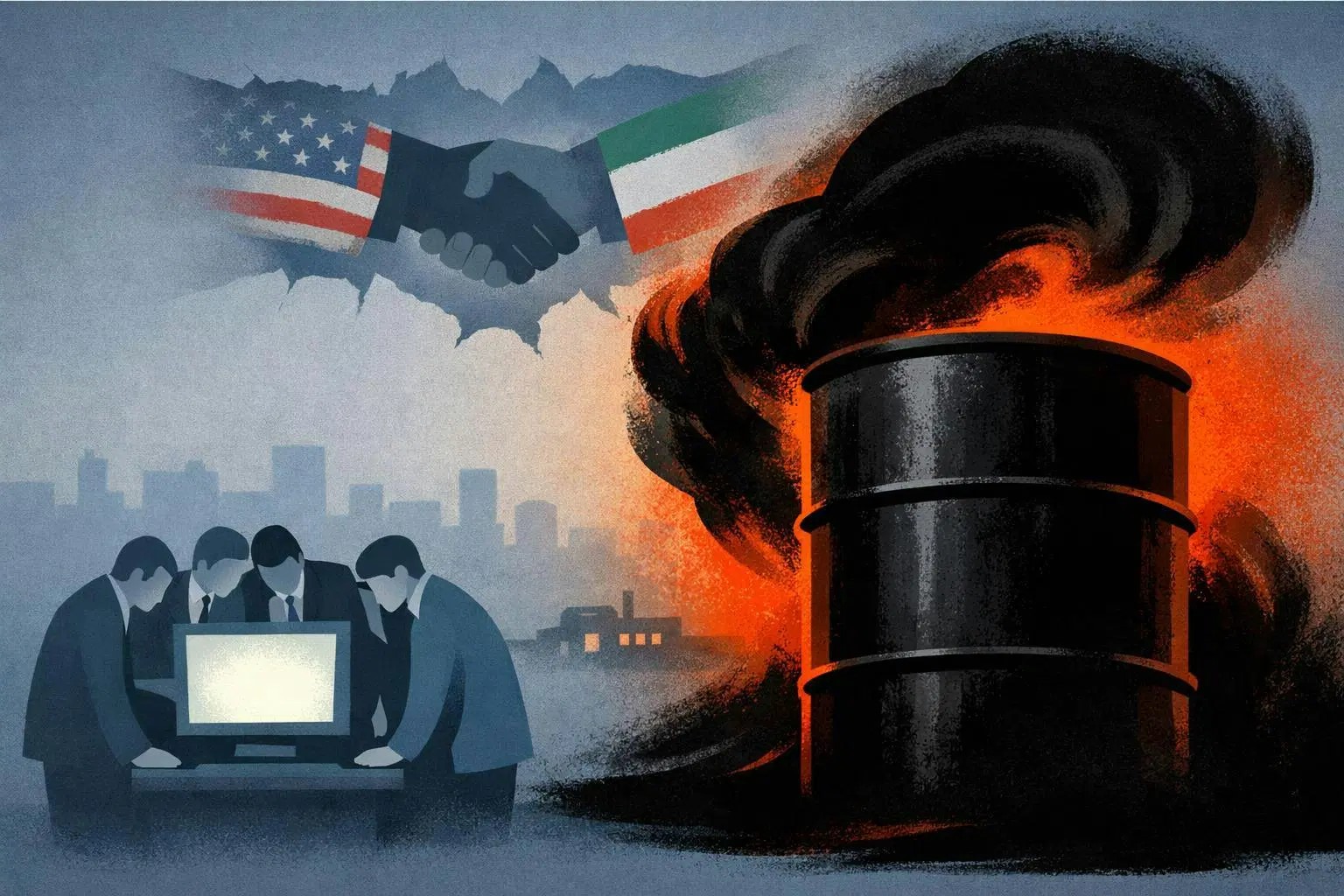
How Rising Fuel Prices Are Driving War Profits and Hitting Our Wallets
Some of you have probably heard me rant before about people who only start caring about war when it affects them. I get genuinely angry about it – the idea that bombs can fall somewhere else in the world and it only becomes important when flights are cancelled, oil prices rise, or food gets more expensive. I’ve always thought that mindset was deeply uncomfortable, even immoral in some ways, because war should matter on humanitarian grounds first, not personal inconvenience.
So this article might seem a bit hypocritical.
Because here I am, writing about how the Iran–Israel tensions, American involvement, and oil politics affect us – the UK, Western economies, global markets, everyday life. And I want to be very clear from the beginning that this is not because Western impact matters more. It doesn’t. The suffering of people in Iran, Israel, Gaza, and across the region matters infinitely more than rising fuel prices or delayed flights, and I am currently working on a separate piece that focuses entirely on that – the people, the violence, the humanitarian reality on the ground, the root causes of the conflict itself. That article deserves deeper research and careful attention, because writing about war without fully understanding the human cost properly would be irresponsible.
This piece is different. This is more of a warning.
It’s a warning because, whether we like it or not, war does not stay contained anymore. It moves through systems – oil markets, political decisions, financial speculation, inflation, global trade – and eventually it reaches us, shaping everyday life in ways that most people don’t notice until they feel it in their wallets or their routines. And while talking about those effects can feel uncomfortable, even self-centred, ignoring them is worse, because it means ignoring the way global power and economic systems operate behind the scenes.
I was reminded of this recently at my boarding house when a teacher explained the Iran tensions and the risks surrounding the Strait of Hormuz, the narrow waterway through which around a fifth of the world’s oil supply travels. She spoke about escalating threats, the possibility of disruption, and what it could mean for global stability, and most people looked completely disengaged. It felt distant, abstract, like something happening somewhere else.
Then she mentioned flights being cancelled and travel becoming more expensive.
Suddenly everyone was listening.
That moment stayed with me, not because it revealed selfishness (though, as I’ve said, I do find people’s earlier indifference quite unempathetic) but because it revealed how modern war becomes real to us through economic consequence. It is often only when systems begin to shift, when oil prices rise or markets react or travel becomes difficult, that people start paying attention. And that is exactly why this conversation matters, because understanding these economic and political ripples helps us understand how deeply interconnected the world has become, and how war, even when geographically distant, quietly reshapes everyday life.
It also reminded me of something I study for English Lit: John Steinbeck’s The Grapes of Wrath.
Steinbeck writes about a world where economic systems stop seeing people as human beings and start seeing them as numbers, where banks and corporations become what he calls “machines and masters,” operating according to profit rather than morality. Reading it now, in the middle of global conflict and economic instability, feels unsettling, because the systems Steinbeck described in 1930s America don’t feel historical or of a past age – they feel familiar. The idea that institutions can “breathe profits” while ordinary people struggle to survive no longer
So this is where Donald Trump comes in. In a BBC article I read, it was reported that traders bought and sold hundreds of millions of dollars’ worth of oil contracts and stocks just minutes before Trump announced that the United States would postpone strikes on Iranian energy infrastructure, and the prices then dropped sharply right after (BBC News, 2026). Specifically, over $170 million in West Texas Intermediate oil contracts and about $150 million in Brent oil contracts were traded in just fifteen minutes before the announcement. Analysts noted that this spike in trading could suggest that some traders had advanced knowledge of Trump’s post, which in financial terms is called “insider knowledge.”
Why is this important? Oil contracts and stocks are essentially bets on whether the price will go up or down. If you can predict the price before anyone else, you can make huge amounts of money almost instantly. The fact that so much money changed hands right before Trump’s announcement is striking because it shows just how sensitive global markets are to political moves, and how war itself can become a financial tool.
Some people have speculated that Trump could benefit indirectly from this kind of situation. Even if he didn’t personally buy or sell the contracts, sharing or signalling information – whether deliberately or simply through predictable patterns in his announcements – could give his allies and financial partners opportunities to profit. And when they profit, he gains influence: investors and companies who make millions from this knowledge are more likely to support him politically, financially, or strategically in the future.
This is not a proven accusation; the BBC article itself does not claim Trump personally acted illegally. But the timing is unusual enough that analysts are asking questions about the possibility of prior knowledge and alliances that could allow certain players to benefit from conflict in ways ordinary people cannot. It’s a stark reminder that the systems controlling war, energy, and money are tightly linked, and that when politicians with power speak or act, some people can turn it into enormous financial gain almost immediately.
But this isnt some far off, economic financial scheme on stocks. The Strait of Hormuz carries roughly 20% of the world’s oil and gas supply, and any disruption immediately affects the cost of fuel, food, and goods globally (The Guardian, 2026a). Threats to its stability ripple down into energy bills, the price of fertilisers, agricultural production, and the cost of groceries, meaning families in the UK and Europe feel the consequences in their everyday lives. Small businesses that operate on tight margins find themselves paying more in taxes and fuel, transporting goods becomes more expensive, and suddenly what used to last a week in the shopping basket only lasts two days. Steinbeck’s line, “Crops were reckoned in dollars, and land was valued by principle plus interest,” feels eerily modern here: our crops are fuel, our land is shipping lanes, and our survival is tethered to systems that calculate profit above human need.
Trump’s involvement, or at least his public statements and actions, also plays a role in these ripple effects. Analysts, including former Defence Secretary Leon Panetta, have warned that aggressive rhetoric and strategic threats can unnecessarily escalate tensions, widening conflict and impacting markets even before physical action takes place (The Guardian, 2026c). Some observers have even suggested that political messaging may influence market activity, though evidence of direct profiteering is not confirmed. Still, the perception alone reinforces the idea that war is entangled with economics: instability becomes profitable for some, and costly for many.
It’s tempting to reduce this to abstract numbers, to read market charts and oil prices and shrug, but when you think about it in human terms it’s immediate. Every spike in fuel or fertiliser costs translates to families buying less food, students paying more for commuting, small companies facing cashflow crises, and ordinary people being forced into decisions that compromise their livelihoods.
Steinbeck knew that the economic machine does not exist in isolation; it moves through communities, families, and individual lives, shaping them until the human cost becomes unavoidable. “They were men and slaves, while the banks were machines and masters,” he wrote. Today, the oil markets breathe profits, and we are the ones who pay for them.
So what does this mean for us, sitting here in the UK, reading about Iran, Israel, and global tensions? It means paying attention – not just to the humanitarian crisis, which deserves a whole separate article, but to the way these events move through our systems and affect our lives in real time. These are the local consequences of global power plays, and understanding them is a step toward seeing the broader picture. War, finance, and politics are connected in ways that are often invisible until they impact your daily life, and Steinbeck’s observations from decades ago remind us that human cost and profit are not equally weighted in these systems.
This is why I write this article as a warning. The people suffering in Iran, Israel, and Gaza deserve attention first, but the ripple effects are here, too, and they are instructive. They show us the machinery of war, the way human life becomes secondary to profit and political advantage, and the way ordinary people are often left to absorb the shock. We cannot ignore it, even if our perspective is limited, even if our knowledge is more grounded in economics than in humanitarian reporting.
To understand the world today is to see these connections, and to care, in whatever way we can, about both the people being bombed and the people whose lives are quietly reshaped by the economic aftermath.
References- PLEASE READ if you can. Inform yourself. Learn more.
BBC News (2026) Traders bet hundreds of millions on oil before Trump Iran announcement. https://www.bbc.co.uk/news/articles/c995xp4jxj2o https://www.bbc.co.uk/news/articles/cg547ljepvzo
The Guardian (2026a) What is the Strait of Hormuz and can the US stop Iran blocking it? https://www.theguardian.com/world/2026/mar/16/what-is-the-strait-of-hormuz-can-us-stop-iran-blocking-it
The Guardian (2026b) UK inflation rate rises as energy prices jump amid Iran war. https://www.theguardian.com/business/2026/mar/25/uk-inflation-rate-energy-price-jump-iran-war
The Guardian (2026c) Trump, Iran and warnings from Leon Panetta. https://www.theguardian.com/us-news/2026/mar/22/trump-iran-leon-panetta
Steinbeck, J. (1939) The Grapes of Wrath.

Comment closely on the writing in the final Chapter (16) of Remainder considering ways in which it demonstrates the styles and concerns of the novel as a whole.
Year 13 English Literature OCR A-Level Coursework : 94% Final Grade In Chapter Sixteen of Tom McCarthy’s ‘Remainder’, the[…]

“Kinship Defines the Heroic”. Compare the ways in which heroism is influenced by Characters’ relationships in Beowulf and Antigone
Year 12 English Literature OCR A-Level Coursework : 94% Final Grade In both Beowulf and Antigone, heroism is inseparable[…]

David Danced Before the Lord with All His Might
“David danced before the Lord with all his might.” – 2 Samuel 6:14 I’ve always loved this verse, though[…]
Giulia
No responses yet