
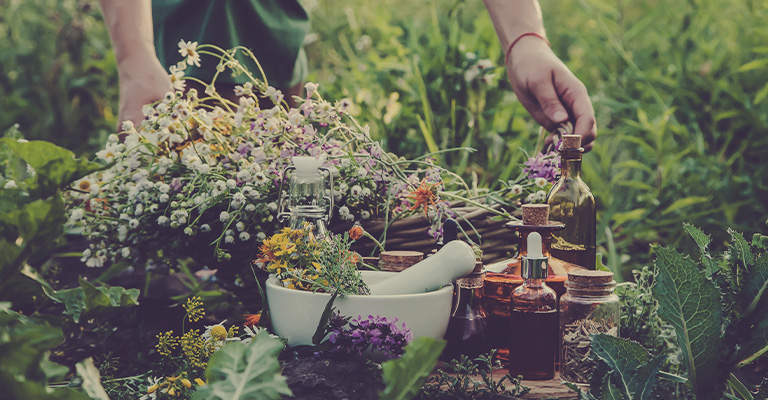
Greek Herbal Wisdom
Growing up, my mum was a firm believer in the healing power of nature and she never missed a chance to make me drink herbal teas whenever I felt even a little under the weather. Chamomile to soothe my nerves, ginger to settle my stomach, and all sorts of fragrant blends filled our kitchen. And when I was really sick, she’d go the extra mile, tying potatoes and onions to my feet- a quirky old remedy she swore by. At the time, it felt a little strange (and a bit smelly!), but looking back, these traditions connect to something much bigger and it made me think about the long history of humans using plants to heal, a history that includes the ancient Greeks.
Herbal medicine is not new. In fact, it stretches back thousands of years and crosses many cultures. The Egyptians, Mesopotamians, Chinese, and Indians all developed rich herbal traditions. For example, the Egyptians documented hundreds of healing plants in the Ebers Papyrus, an ancient scroll dating to around 1550 BCE. However, it was the ancient Greeks who took herbal healing to a new level, carefully studying plants, understanding their effects, and recording this knowledge systematically. Greek doctors like Hippocrates and Dioscorides laid the groundwork for many modern herbal practices and their wisdom still resonates today.
The Role of Herbs in Ancient Greek Medicine and Famous Medics
Ancient Greek medicine was a fascinating blend of observation, philosophy, and natural science. Hippocrates, often called the “Father of Medicine,” believed in treating the whole person- body, mind, and environment. He saw herbs not just as medicine but as a way to restore balance and harmony. His famous oath, still referenced today (hippocratic oath), stressed ethical healing much of which involved natural remedies.
One of Hippocrates’ favorite herbs was thyme, known for its antiseptic and calming properties. Oregano was prized for digestion and respiratory health, while mint was commonly used to soothe stomach aches and headaches. The Greeks also valued garlic for its immune-boosting effects and willow bark for pain relief – long before aspirin existed.
Another key figure was Dioscorides, a Greek physician and botanist who lived about 2,000 years ago. He wrote De Materia Medica, a massive herbal encyclopedia describing over 600 plants and their uses. This text was hugely influential and formed the basis of herbal medicine in Europe for centuries. Dioscorides explained how to prepare herbs as infusions, poultices, oils, and powders, preserving their “essence” – the concentrated healing power within.
What Makes Herbs So Powerful?
What is it about herbs that makes them so effective for healing? The answer lies in their complex chemistry. Plants produce a wide variety of bioactive compounds- such as essential oils, alkaloids, flavonoids, terpenes, and antioxidants- that serve to protect them from pests, infections, and environmental stress. Remarkably, these same compounds also interact with our bodies’ biological systems in beneficial ways, influencing everything from inflammation to nervous system activity.
Take chamomile, for example. Its calming and soothing effects are largely due to a class of flavonoids called apigenin. Apigenin binds to specific receptors in the brain known as GABA (gamma-aminobutyric acid) receptors. These receptors are part of the body’s natural system for reducing nerve activity and promoting relaxation. By enhancing GABA’s calming effect, chamomile helps decrease anxiety and facilitates restful sleep. Additionally, chamomile’s anti-inflammatory properties come from other compounds that reduce the production of pro-inflammatory molecules in the body, soothing not only the mind but also physical discomfort.
Ginger offers a different but equally fascinating profile. Its active compound, gingerol, possesses potent anti-inflammatory and antioxidant effects. Gingerol inhibits enzymes and signaling molecules involved in inflammation, which explains why ginger can relieve nausea and soothe digestive issues.
The ancient Greeks understood that the healing power of a plant was contained in its “essence”- the concentrated active compounds released when herbs are prepared correctly. Whether through steeping leaves in hot water (to make infusions), crushing herbs to release their oils, or creating poultices, these methods extracted the therapeutic molecules that affect our bodies at a cellular level.
Modern pharmacology has confirmed many of these effects, validating the observations of Greek physicians like Hippocrates and Dioscorides.
Ancient Greek Methods You Can Try Today
One of the best things about Greek herbal wisdom is how accessible it still is. You don’t need to be a doctor or botanist to try these methods at home. Here are some simple ways to connect with ancient healing traditions:
- Herbal teas (infusions): The most common and soothing method. To make an infusion, pour boiling water over dried herbs like chamomile, mint, or thyme, cover, and steep for 5–10 minutes. Drink warm to relax or aid digestion.
- Poultices: Crush fresh herbs (like oregano or garlic) and apply them directly to the skin to reduce inflammation or infection. Wrap with a clean cloth and leave for 20–30 minutes.
- Herbal baths: Add herbs such as rosemary or lavender to warm bathwater to ease muscle pain and calm the mind.
- Infused oils: Soak herbs in olive oil for several weeks to extract their healing compounds, then use as massage oils or skin treatments.
Why It Matters Today
In a world dominated by pharmaceuticals and fast fixes, reconnecting with natural remedies offers a gentle and holistic alternative. The ancient Greeks remind us that healing isn’t just about fighting symptoms but restoring balance within ourselves and with nature.
Exploring herbal wisdom also encourages us to slow down and respect the natural world – something that feels more important than ever as we face environmental challenges. Plus, making your own herbal remedies can be a creative, calming ritual that connects you with centuries of human knowledge.
A Quirky Greek-Inspired Herbal Tea Recipe to Try
Inspired by my mum’s teas and ancient Greek herbs, here’s a simple recipe to soothe your mind and body:
Greek Garden Herbal Tea
Ingredients:
- 1 tsp dried chamomile
- 1 tsp dried thyme
- 1 tsp dried mint
- 1 slice fresh ginger
- Honey (optional)
Instructions:
- Boil 1 cup of water.
- Place the chamomile, thyme, mint, and ginger in a teapot or mug.
- Pour the boiling water over the herbs. Cover and steep for 7 minutes.
- Strain into a cup, add honey if desired, and sip slowly.
Nature’s cure has travelled through time and has crossed continents and cultures, but the essence remains the same: plants hold the key to wellness, if we know how to listen. Whether it’s a steaming cup of herbal tea or a fragrant poultice, embracing these natural methods can reconnect us to a timeless + holistic path of healing.

Comment closely on the writing in the final Chapter (16) of Remainder considering ways in which it demonstrates the styles and concerns of the novel as a whole.
Year 13 English Literature OCR A-Level Coursework : 94% Final Grade In Chapter Sixteen of Tom McCarthy’s ‘Remainder’, the[…]

“Kinship Defines the Heroic”. Compare the ways in which heroism is influenced by Characters’ relationships in Beowulf and Antigone
Year 12 English Literature OCR A-Level Coursework : 94% Final Grade In both Beowulf and Antigone, heroism is inseparable[…]

David Danced Before the Lord with All His Might
“David danced before the Lord with all his might.” – 2 Samuel 6:14 I’ve always loved this verse, though[…]
No responses yet